Key takeaways
Fill, sign, and submit MI Quit Claim Deed Statutory Form from any browser — or have AI generate a custom version in seconds. No installs, no printing, no back-and-forth.
- A Michigan Quit Claim Deed transfers property interest from a grantor to a grantee without providing any warranties of title.
- The document requires grantor and grantee names, a legal property description, and the drafter’s name and address.
- The grantor must sign the deed in the presence of two witnesses and a notary public to ensure legal validity.
- A Property Transfer Affidavit must be filed with the local assessor within 45 days of the transfer to avoid penalties.
- Completed deeds should be recorded with the appropriate County Register of Deeds to officially document the transfer of property interest.
- You can use pdfFiller to fill, edit, eSign, and securely store your Michigan real estate documents in a secure environment.
What is MI Quit Claim Deed Statutory Form?
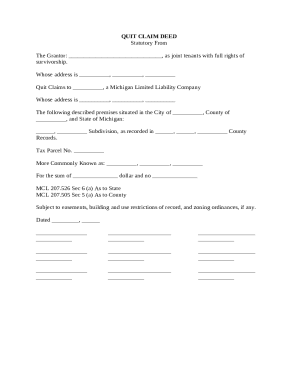
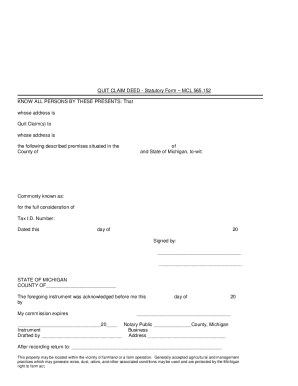
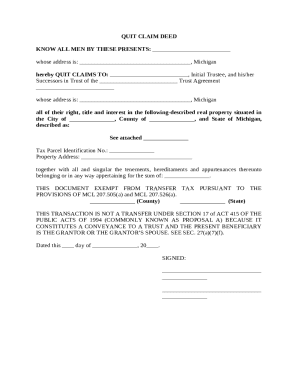
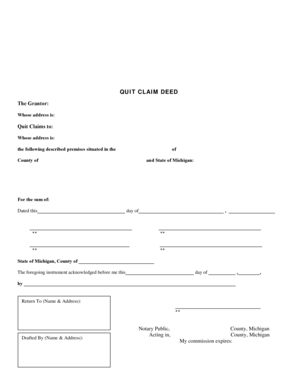
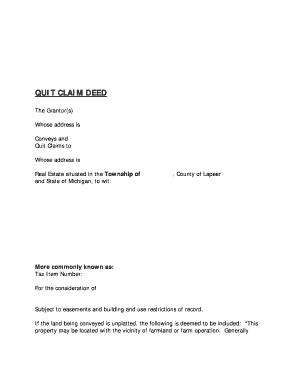
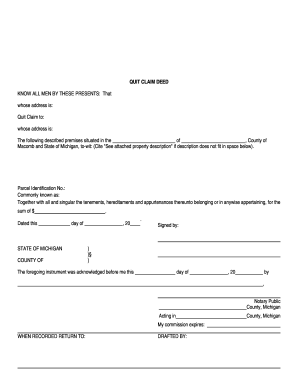
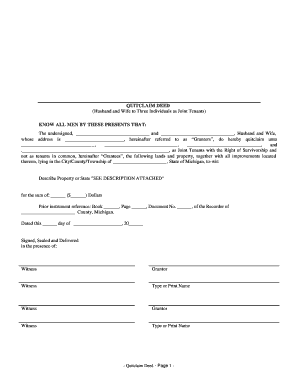
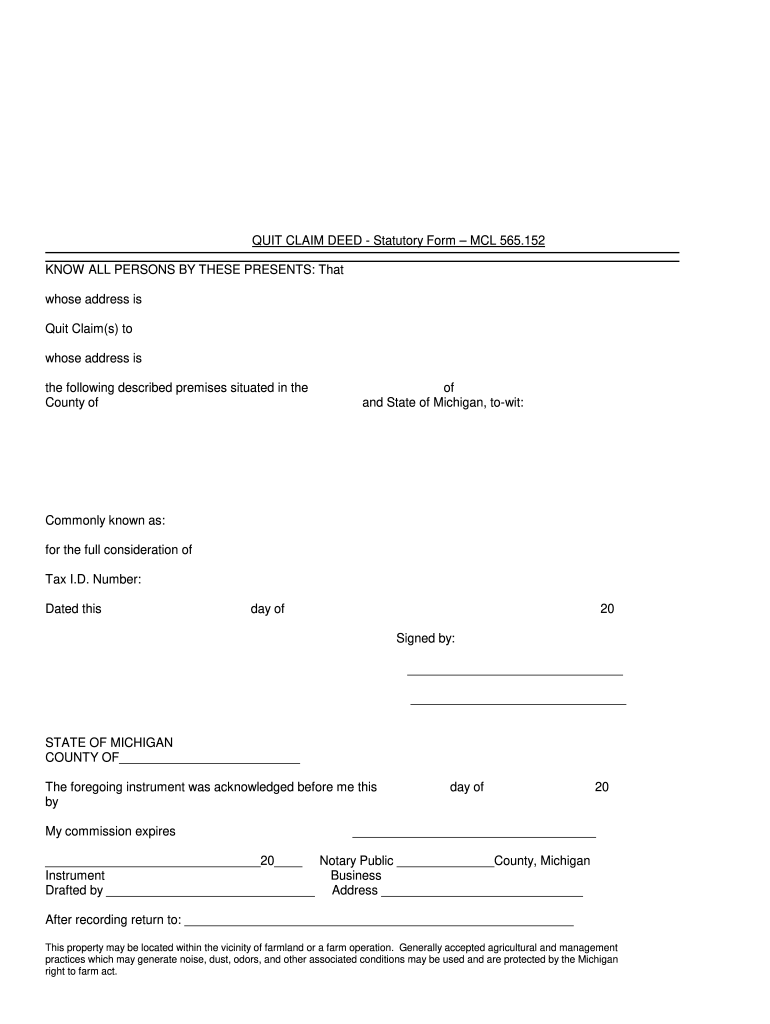
Michigan Quit Claim Deed is a legal instrument used to transfer any interest a grantor holds in real property to a grantee without providing warranties of title. This document serves to convey the grantor's current ownership stake, whatever it may be, without guaranteeing that the title is free of liens or that the grantor actually owns the property. It is commonly utilized for transfers where the parties do not require the protections or guarantees associated with a warranty deed or a covenant deed.
The document captures essential details including the names of the grantor and grantee, the grantor's residence, and a formal legal description of the real estate. To be valid for recording, the instrument must also include the name and address of the person who drafted it. The process requires the grantor's signature, the signatures of two witnesses, and an acknowledgement by a notary public to ensure the transfer meets the statutory recording requirements of the state.
Michigan Legislature and Michigan County Registers of Deeds
Who needs the MI Quit Claim Deed Statutory Form — and who doesn't
Not everyone files MI Quit Claim Deed Statutory Form. The checklist below tells you whether it applies to your situation — and points you to the right alternative if it doesn't.
You need this MI Quit Claim Deed Statutory Form if…
- you intend to transfer an interest in Michigan real estate without providing any warranties or guarantees regarding the title.
- you are a grantor who wishes to convey your current ownership interest, whatever that may be, to a grantee.
- you want to facilitate a property transfer where you are not responsible for defending the title against future claims or liens.
You do not need this MI Quit Claim Deed Statutory Form if…
- you want to guarantee that you own the property and have the legal right to sell it with a clear title.
- the parcel of land you are transferring is located in a state other than Michigan.
- you prefer to use a warranty deed to provide the recipient with protection against potential title defects or existing encumbrances.
Why you need the MI Quit Claim Deed Statutory Form
Why people fill out MI Quit Claim Deed Statutory Form, and what tends to go wrong when they don't.
-
Transfer Real Estate Use this deed to transfer any interest you hold in a parcel of real estate to a grantee. It is the appropriate choice when no warranties or guarantees of title are intended.
-
Meet Statutory Requirements The form includes required fields for grantor residency, drafter information, and legal property descriptions. Providing these specific details ensures the document satisfies Michigan’s recording requirements with the Register of Deeds.
-
Streamline Document Preparation pdfFiller is an online platform for editing, completing, and managing PDF documents and forms. You can fill, edit, and eSign this deed online, then securely store it before notarization.
-
Avoid Financial Penalties Executing this deed triggers the 45-day deadline to file a Property Transfer Affidavit. Timely completion helps you avoid daily penalties and ensures the local assessor reports the property transfer correctly.
MI Quit Claim Deed Statutory Form vs. similar documents
MI Quit Claim Deed Statutory Form gets mixed up with similar documents more than most. Here's how to tell them apart, and what filing the wrong one actually costs.
| Comparison criteria | Michigan Quit Claim Deed | Warranty Deed | Covenant Deed |
|---|---|---|---|
| Purpose | Transfer interest without title warranties | Transfer property with title guarantees | Transfer property with limited title guarantees |
| When to use | Transferring interest without providing title warranties | Guaranteeing ownership and title free of encumbrances | Guaranteeing title against defects during grantor's ownership |
| Signatures required | Grantor, two witnesses, and notarization | Information not provided in documentation | Information not provided in documentation |
| Filing | Michigan County Registers of Deeds | Information not provided in documentation | Information not provided in documentation |
| Governing reference | MCL 565.152 | MCL 565.151 | MCL 565.351 |
What each section of MI Quit Claim Deed Statutory Form means
Every section explained — what it's asking, the records you'll need on hand, and the mistakes that most often cause a rejection or follow-up request.
| Grantor and Grantee Names | Enter the full legal names of the parties transferring the property interest and the individuals or entities receiving the interest in the real estate. |
|---|---|
| Legal Property Description | Provide the formal legal description of the Michigan real estate being conveyed, ensuring it accurately matches the records held by the local Register of Deeds. |
| Grantor Residence Details | Specify the city, village, or township and the state where the grantor currently resides to comply with Michigan recording requirements for property instruments. |
| Drafter Name and Address | Include the full name and complete address of the person who prepared this quit claim deed, as required for filing with the county authorities. |
| Grantor Signature | The person transferring their interest in the property must sign this section to legally execute the document and authorize the transfer to the grantee. |
| Two Witness Signatures | Two separate individuals must witness the grantor's signature and provide their own signatures on the document to verify the execution of the deed. |
| Notary Public Acknowledgement | A notary public must acknowledge the grantor's signature, providing their official seal and commission details to finalize the document for recording in Michigan. |
How to fill out MI Quit Claim Deed Statutory Form using pdfFiller
A walkthrough from the first field to the signature line. With your records in front of you, most people finish in under ten minutes.
-
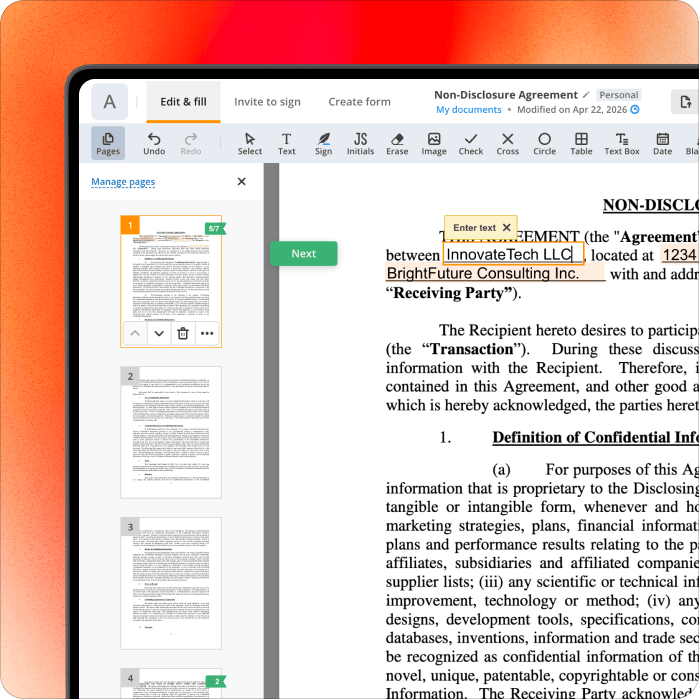
Open the Document Click Get Form to open Michigan Quit Claim Deed in the pdfFiller editor to begin customizing your michigan quit claim deed form for property transfer.
-
Identify the Parties Click the designated text fields to type the full legal names of both the grantor transferring the interest and the grantee receiving the real estate interest.
-
State Grantor Residence Select the appropriate fields to enter the city, village, or township and the state where the grantor currently resides as required by Michigan recording standards.
-
Insert Property Description Use the text tool to provide the complete legal description of the real estate being conveyed, ensuring accuracy for the local register of deeds.
-
Enter Drafter Information Locate the section for the drafter’s details and type the name and address of the person who prepared this michigan quit claim deed template.
-
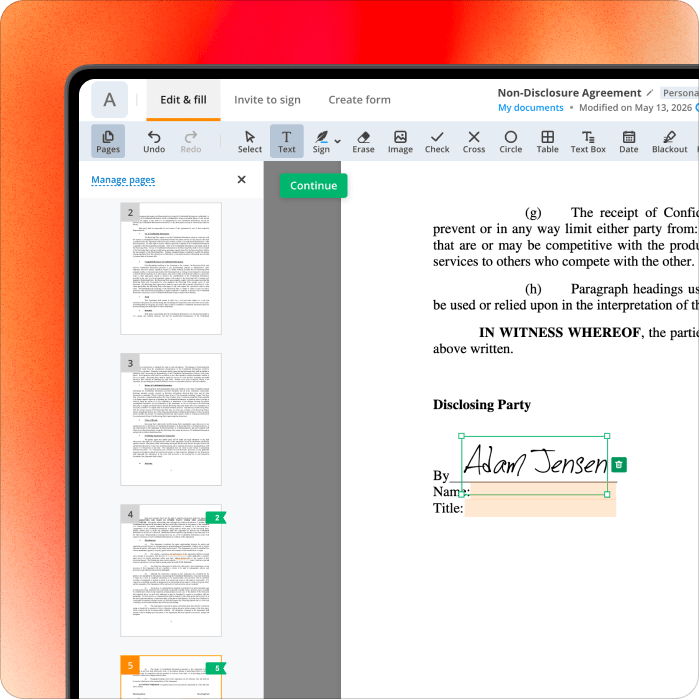
Record Witness Signatures Have two witnesses use the signature tool to sign the document, verifying the grantor's signature as required by Michigan state law for valid recording.
-
Complete Notarization Access pdfFiller’s online notarization service to complete the acknowledgment section, ensuring all state-required details are present for the official recording process.
-
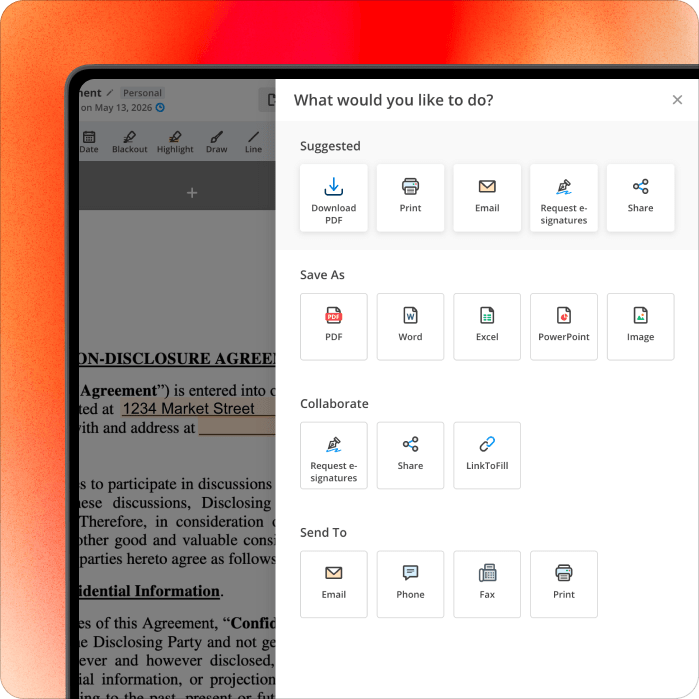
Sign and Send Add a legally binding eSignature using the Sign tool, then use pdfFiller to securely save, download, or share the completed document with the appropriate local authorities.
Required disclosures & attachments
The fields MI Quit Claim Deed Statutory Form won't be accepted without — and the disclosures filers most often miss.
Deadlines, key dates & penalties for MI Quit Claim Deed Statutory Form
When MI Quit Claim Deed Statutory Form is due, what late filing actually costs, and how to request more time if you need it.
| Property Transfer Affidavit Deadline | While the deed itself does not have a strict recording deadline, the associated Property Transfer Affidavit (Form L-4260) must be filed with the local assessor within 45 days of the property transfer. |
|---|---|
| Late Filing Penalties | Failure to file the required Property Transfer Affidavit within the 45-day period can result in a penalty of $5.00 per day for every day the document is late, up to a maximum penalty of $200.00. |
Recent changes to MI Quit Claim Deed Statutory Form
The Michigan Quit Claim Deed is governed by Michigan Compiled Laws Section 565.152, which provides the statutory framework and required language for this type of real estate instrument.
The current requirements for the deed were last updated on June 10, 1998, through Act 118. This amendment finalized the legal standards for how property interests are transferred without warranties in the state of Michigan.
Pointer: Always ensure the document is signed by the grantor, witnessed by two people, and notarized to meet Michigan's recording requirements.
Related content
The forms, guides, and worksheets most filers reach for alongside MI Quit Claim Deed Statutory Form.
Key terms used in MI Quit Claim Deed Statutory Form
A one-sentence glossary of the MI Quit Claim Deed Statutory Form terms and concepts you'll see throughout this guide.
- Grantor
- The person or entity transferring their current interest in Michigan real property to another party.
- Grantee
- The person or entity receiving the property interest from the grantor through the quit claim deed.
- Property Description
- The specific legal description of the real estate being conveyed, identifying the exact parcel in Michigan.
- Property Transfer Affidavit
- A required filing with the local assessor to report ownership changes for proper tax assessment within 45 days.
- Principal Residence Exemption Affidavit
- A document filed by the grantee to claim a tax exemption if the property serves as their primary home.
- Drafter
- The individual who prepared the deed, whose name and address must be included on the recorded instrument.
Frequently asked questions about MI Quit Claim Deed Statutory Form
Quick answers to the questions we hear most often about completing the MI Quit Claim Deed Statutory Form.
A Michigan Quit Claim Deed is a legal instrument used to transfer any interest a grantor may have in real property to a grantee without providing any warranties or guarantees regarding the title. This means the recipient only receives whatever ownership interest the grantor currently holds, which could be anything from a full interest to none at all.
A Michigan Quit Claim Deed must include the names of the grantor and grantee, a legal description of the property, the grantor's residence, and the name and address of the person who drafted the document. These elements are required under Michigan Compiled Laws to ensure the instrument is valid for recording with the County Register of Deeds.
Yes, a Michigan Quit Claim Deed must be signed by the grantor in the presence of two witnesses and acknowledged by a notary public. These signing requirements are necessary for the deed to be officially recorded by the Michigan County Register of Deeds, ensuring the transfer of property interest is legally recognized.
While there is no strict deadline for recording the deed itself, the associated Property Transfer Affidavit (Form L-4260) must be filed with the local assessor within 45 days of the transfer. Failure to file this affidavit within the specified timeframe can result in a daily penalty of $5.00, up to a maximum of $200.00.
Yes, pdfFiller is an online platform that allows you to fill, edit, sign, and share a Michigan Quit Claim Deed from your web browser. You can add text to the required fields, insert a legally binding e-signature, and send the completed document to others via a link or email. All documents are kept in secure, encrypted storage.